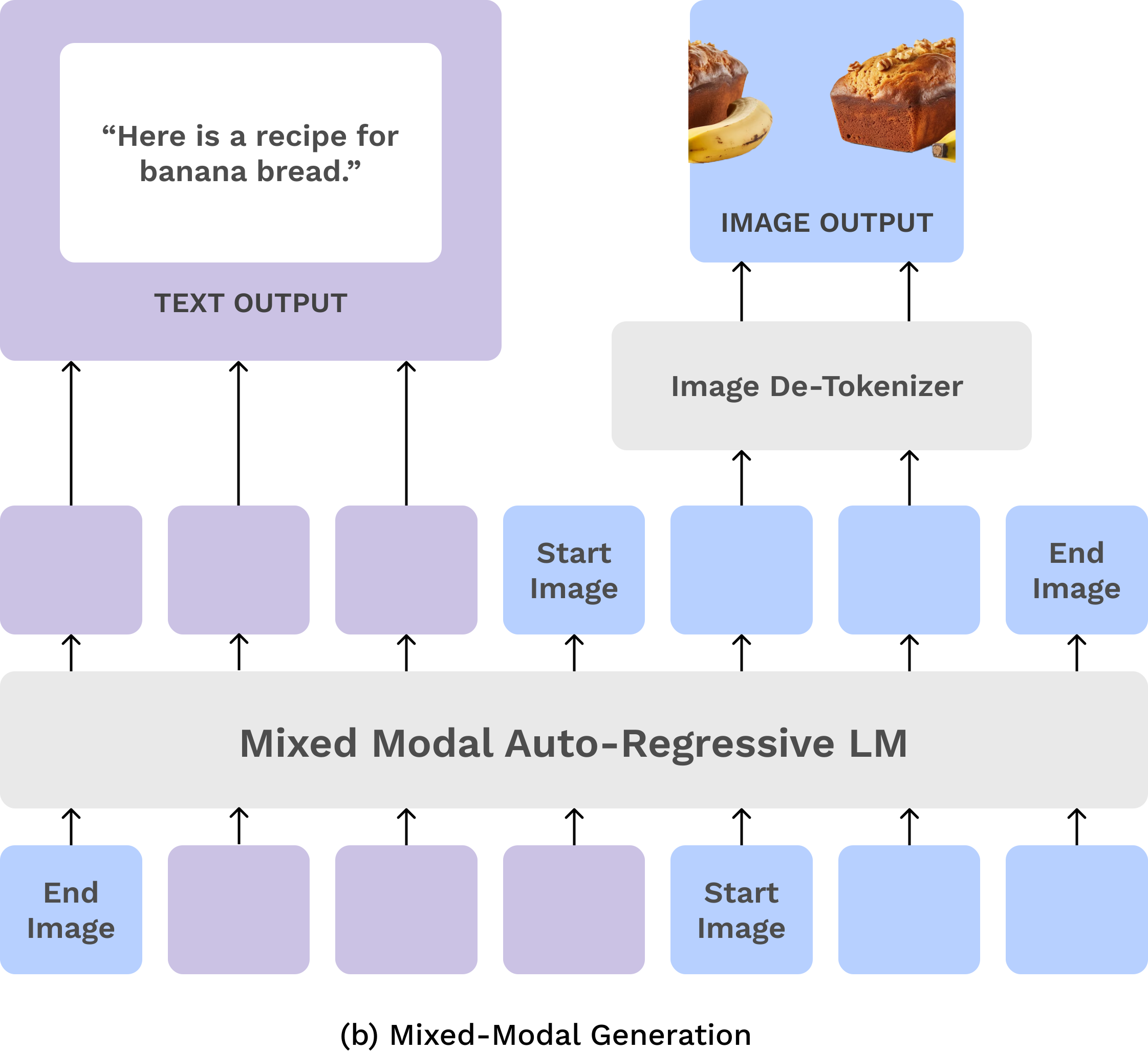

As a groundbreaking advancement in AI, Meta’s Chameleon represents the next frontier with its breakthrough early fusion mixed-modal technology. Meta’s Fundamental AI Research (FAIR) team developed this model to generate human-like text based on a given prompt or topic. The term “Chameleon” aptly describes its unique ability to adapt its output to match the context and tone of the input it receives.
Chameleon’s early-fusion technology
Unlike traditional models that handle text and image separately, Chameleon processes them together from the outset, setting a new standard for understanding and generating mixed-modal content. This innovative architecture enables the model to integrate multiple inputs in ways previously unachievable with conventional systems. Imagine the power of GPT-4 combined with Stable Diffusion’s image generation capability and DeepFloyd’s text and image fusion—now all unified into one!
Comparison with similar AI models
Meta’s Chameleon stands out among its peers in the realm of GenAI due to its early-fusion mixed-modal technology. Unlike traditional models that handle text and image separately, Chameleon integrates these inputs from the outset, enabling a more cohesive and nuanced understanding of content. This approach contrasts with models like Google’s Parti and OpenAI’s DALL-E, which primarily focus on either text-to-image or image-to-text capabilities. While these models excel in specific tasks, Chameleon’s ability to seamlessly blend text and image data from the start sets it apart, offering broader applications across industries such as media, education, and healthcare. The early fusion architecture enhances Chameleon’s performance in tasks like content generation and visual understanding and underscores Meta’s commitment to advancing AI technology through innovative integration strategies.